We are all becoming managers

AI agents are so good that some days I don’t code anymore: instead, I manage agents. Given a feature, I discuss the requirements with the agent, discuss possible solutions, decide on a design and ask the agent for an implementation.

I then test and review it. Sometimes it’s great; other times we made the wrong design decision and I start the process again.

I’m still on top of the code, but this doesn’t feel like coding. I’m not thinking about naming variables or off-by-one errors, although I do sometimes think about cache invalidation once in a while. Mostly I’m 1) thinking about the problem, 2) how solving it helps the business and 3) how to describe it in such a way that I will recognize the solution once it’s done. That last point feels much more like managing than coding, especially when you have five agents working simultaneously on different branches.

Some colleagues are riding the AI wave through IDEs and plugins. I find that plain vanilla Vim is more than enough, but I love AI plugins inside GitHub, Linear, and Slack. Asking OpenHands to fix pre-commit issues directly on GitHub feels like heaven.

As agents gain autonomy, the natural place to talk to them are collaboration tools like Slack, GitHub and Linear. There they can easily talk to each other too: agents writing issues, creating PRs, assigning PRs for reviews, everything done transparently through collaboration tools were humans stay on top.

To some engineers this is a bitter lesson, they chose to be engineers precisely because they don’t want to manage. AI inside one IDE will only get you so far though, so you start a second IDE and a third. By then you are already managing, and you might as well do it from collaboration tools. To them I don’t have many words of advice, except to try it.

Next time a cool feature is suggested in a slack conversation, don’t open an IDE, instead @ an agent. It takes another set of skills, but I know you’ll manage it.


Learning from IBM’s ads

Ads are one way company communicate with people. As any communication, even when if possible false or misleading, it always leaks some truth. At the very least, it tells us what the other one wants to say.

With that in mind, let’s compare two IBM ads, one from the 60’s and one from the present, and draw a line to foresee where the industry is going.

To start, marvel at IBM’s 1967 tour of force ‘Paperwork Explosion’:

The aesthetic is overpowering, it seems it came straight out of a Mad Men episode. It speaks of a very complex time, and yet much simpler than today. Paperwork seems like a necessary evil, something to manage at best as we can. Completely opposed to today’s mantra of ‘data is the new oil‘.

But at that moment it seems insurmountable. The video paints a bleak reality. They need to do all this paperwork, and there is not enough time nor people to do it.

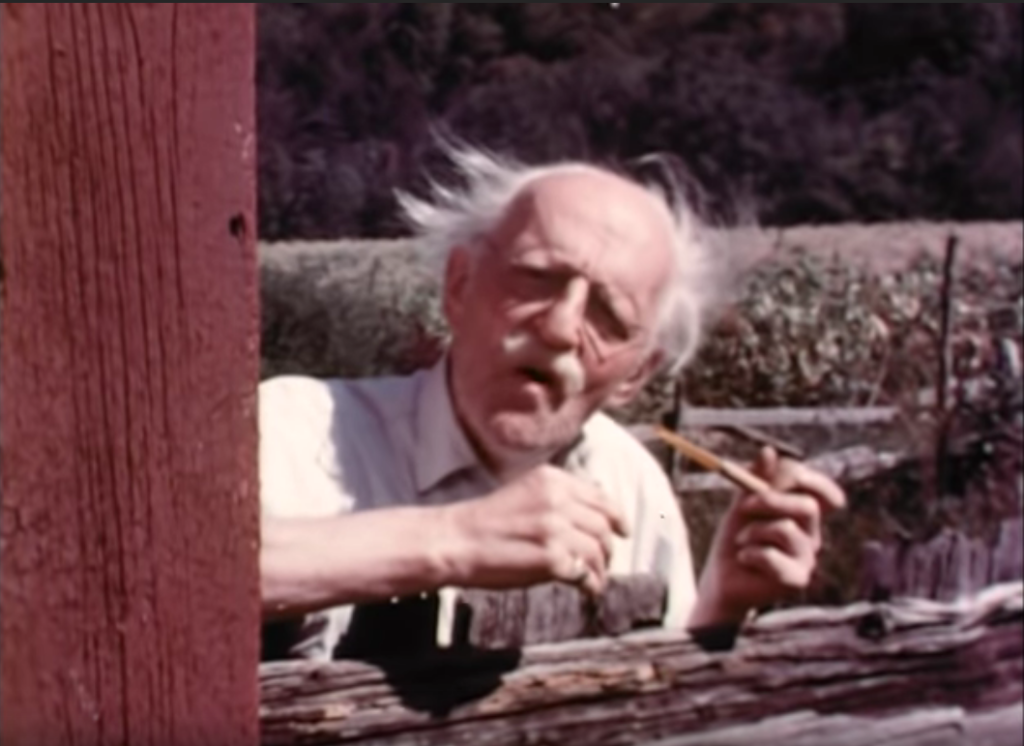
How can this be solved? In the best American way, we confront an explosion, followed by a wise farmer.

Look at him, chilling with a pipe in the middle of a corn field, while dropping these words of wisdom:

Seems to me we could use some help.

How can we argue with that? Obviously, IBM can help us, and it gives us an strategic slogan:

Machines should work; People should think.

It is great. The overall vibe is that IBM will provide a machine for paperwork. Someone will have to drive it, and that human will be much more productive, leaving time to think. That time will be needed though, someone has to understand the machine, and there were no YouTube tutorials nor UX seminars back then…

Let’s continue. Half a century later, what is IBM doing?

How has time changed things. It is difficult to see where machines end and people begin. The thinking seems to be shared between both, and people are called smart for working with smart machines. They are integrated.

But if machines are doing part of the thinking, what are people doing with their extra time?

Well, if you walk through the playlist a new theme appears: they are all chilling like the farmer, and they all care about how they impact others.

Those are IBM’s giant ad footsteps. Where are they leading to?

Well the next logical step is for machines to do what we are doing right now.
Caring with us.

How are machines caring for you right now? How do you imagine they will care in the future?